
Sara Moore
Bula from Fiji! Today, Saturday, June 6, we arrived in Nadi, Fiji at about 6 AM local time. Fiji is 16 hours ahead of Eastern Standard Time, meaning we were technically travelling for two days over the course of a ten and a half hour flight.
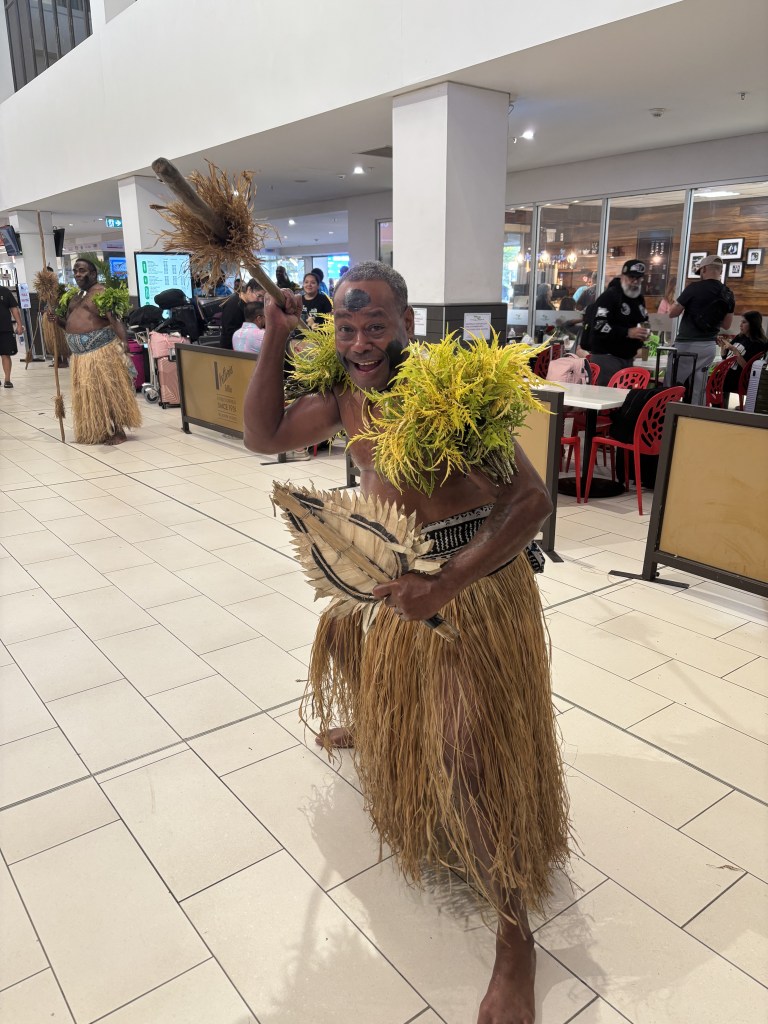
When we touched down in Nadi, we were joyously greeted by employees of Air Fiji and the Nadi International Airport, with the word “bula” which means “hello.” The most exciting part of this welcome was a group of men who were dressed in traditional warrior garb and chanted at us as we walked through the gate. After this warm welcome, we boarded a bus which would take us to the capital city of Suva.
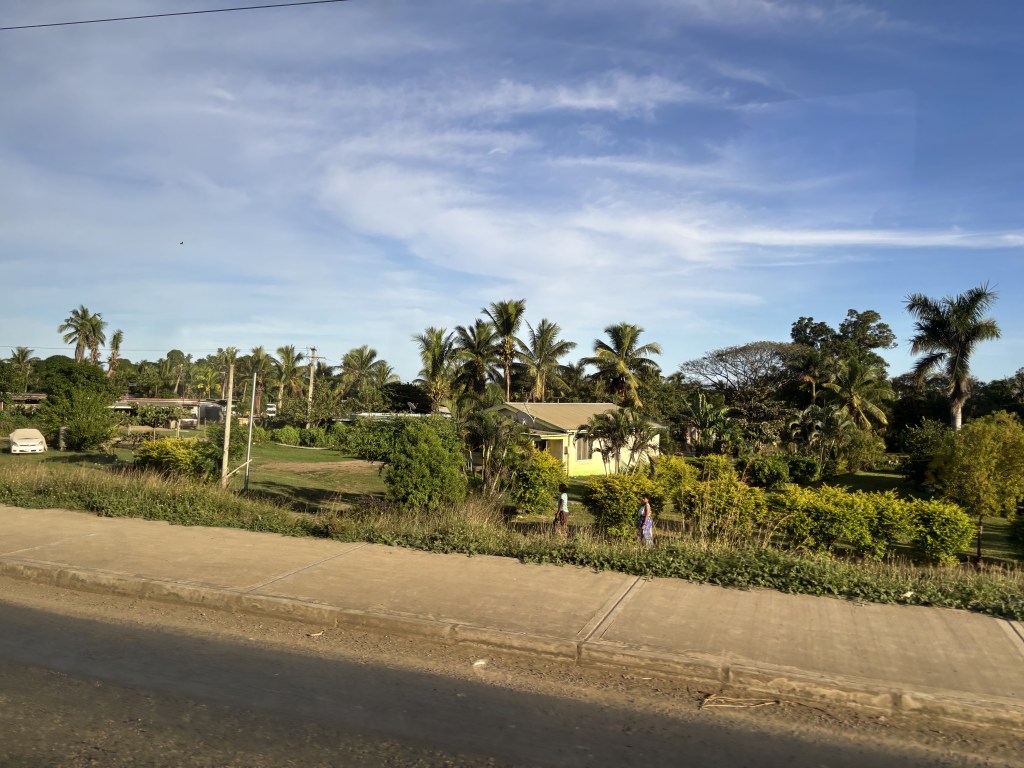
During this three and a half hour trip, we journeyed along the coast of Fiji as the two major cities are on opposite sides of the island. Our stay in Nadi was brief as we entered into the rural landscape of Fiji’s coastline. I was struck by the amount of greenery that was present, including evergreens which I did not know grew in tropical climates. Many of Fiji’s rural villages share a similar structure of homes, businesses, livestock, and crops which can all be viewed from the road. Most Fijians live along the coast, leaving the inner island as a largely untouched natural area. We saw a number of individuals going about their day during our drive, which was a reminder of one of the main focuses of this trip which is the power of stories at the intersection of climate justice and religion and how we are here to learn from them and amplify their voices.
When we arrived in Suva, we checked into our hotel and regrouped after many hours of travel. We then set off to explore the city. Suva stands in stark contrast to the villages we passed on the bus. While the villages were quiet and peaceful, Suva was teeming with noise and activity. It is a unique city that contains a mixture of different architectural styles which reflect the culture of the Fijian people and their experiences and history. One thing that stands out about Suva is how clear the surrounding water is. There was a canal that ran through a main portion of the city that was almost entirely clear of trash, which cannot be said for bodies of water in other large cities. However, I noticed as we entered the city, the amount of barges and construction in and around the water, which made me question how clean it truly was.
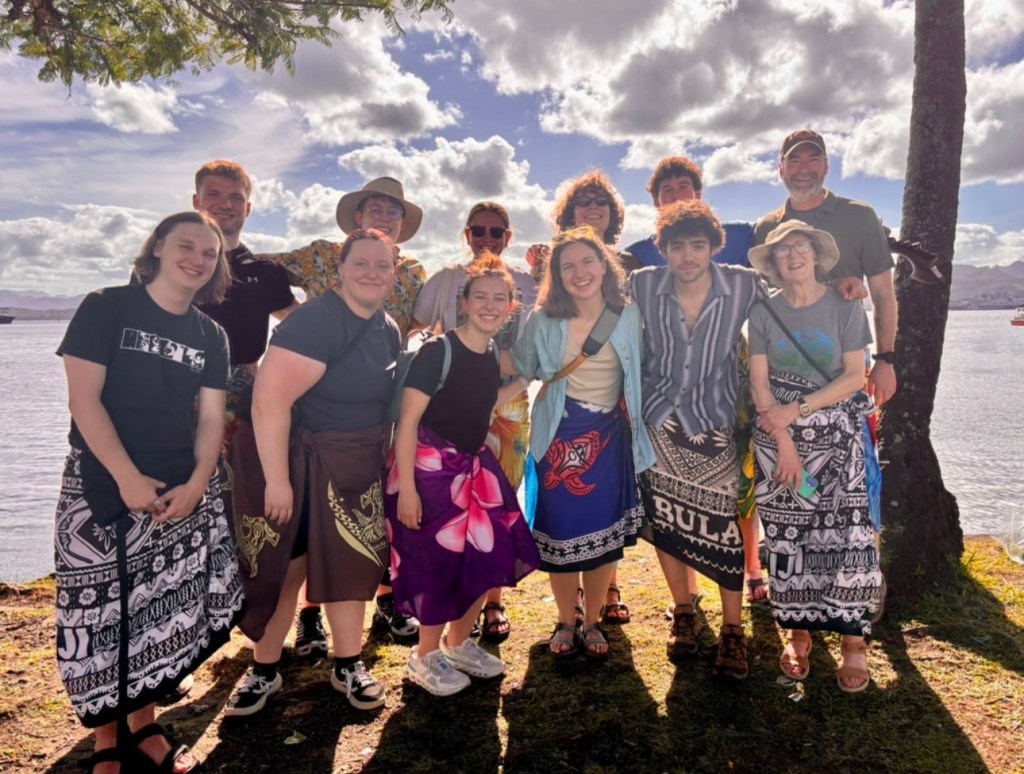
After exploring the city a little, we visited a local market to purchase sarongs, which are a traditional wrap worn by Fijians on special occasions. During this visit to the market, we had the opportunity to interact with the locals, bartering with them for items. Unlike the products we see in American markets, many of the products here were local. The sarongs were stitched by hand, people sat on the sidewalks selling fresh produce, and there were many stalls selling jewelry made from shells from the island.
Later in the evening, we had the opportunity to have dinner with members of the Pacific Conference of Churches (PCC). The PCC is one of the major voices in the fight against climate change in the Pacific islands. They work largely with young people ages 18-35 to provide them with the tools and knowledge to be better advocates of climate justice. One major theme that arises when discussing climate change with young people is anxiety. They are anxious about their futures and that of their families and homes. The PCC brings together people from across the Pacific islands to amplify their voices, discuss their plans for the future, and provide a strong community for the youth to rely on during troubling times.
As today was only our first day, there is still much to learn about the PCC and their very important work. We will have the opportunity to continue to work with them and learn from them over the next few weeks, so stay tuned!
 Pacific Climate Justice TREK
Leave a comment