Bula from Kuata island! Today is Wednesday, June 24th. As we near the end of the trip, we are spending more time reflecting on our experiences and considering what we will do with them moving forward. We have been forever changed by our bonds with the people we met, the stories we heard, and the perspectives we have gained. While we know that the most purposeful thing we can do to help the fenua/ vanoa (people, land, community, ocean, past and future generations) is to share people’s stories, we also know that articulating these new understandings in meaningful ways so others understand is not an easy task. More on these reflections later.
The resort hosts a variety of activities to do throughout the day, and we have all been trying to take full advantage. I started my day by attending a Fijian language lesson. In addition to learning the numbers and how to pronounce the alphabet, we learned that “bula”, which is commonly used as a greeting, also translates to “life”, so when people say “bula vinaka” they are saying “good life”, a reminder to appreciate every moment. We also learned that while the dialects of nearby island groups are somewhat similar, island groups further away cannot understand each other. The main dialect used throughout Fiji is taught, along with English, in primary school so a shared language can allow effective communication.
Later in the afternoon, some of us took a traditional basket weaving class, where we learned how to make palm leaf baskets with a handle.
The evening offered a lecture on manta rays! Those who attended said they learned about the types of rays, their evolution, feeding, and behavior.
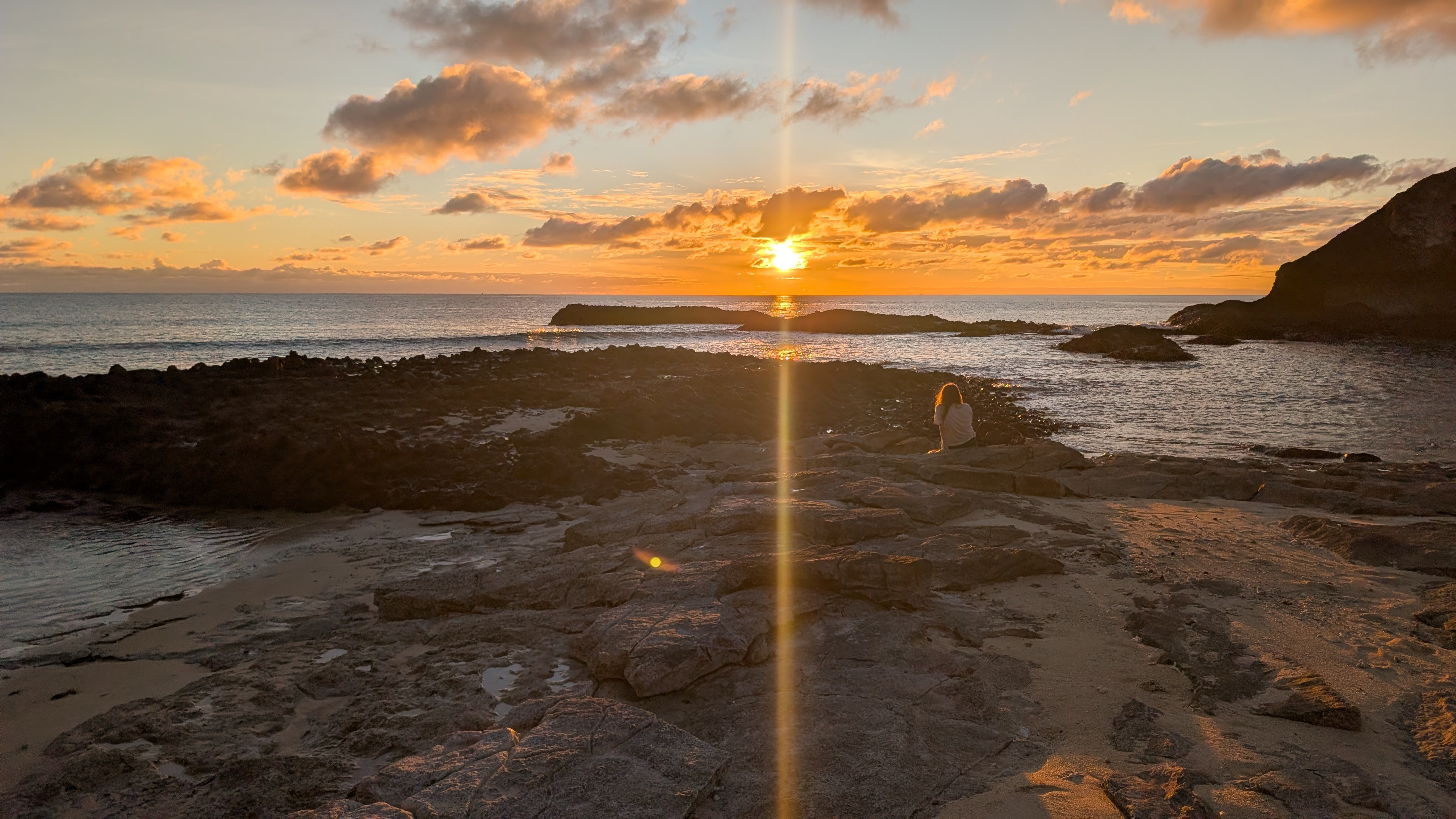
After a beautiful sunset on the water, I went to dinner where we had another debrief discussion. We finished up our conversation from last night about what we can actually do with the experiences we have had. We discussed how sharing our experiences and people’s stories in a lecture series could be impactful, and different strategies to show people that climate is a top priority.
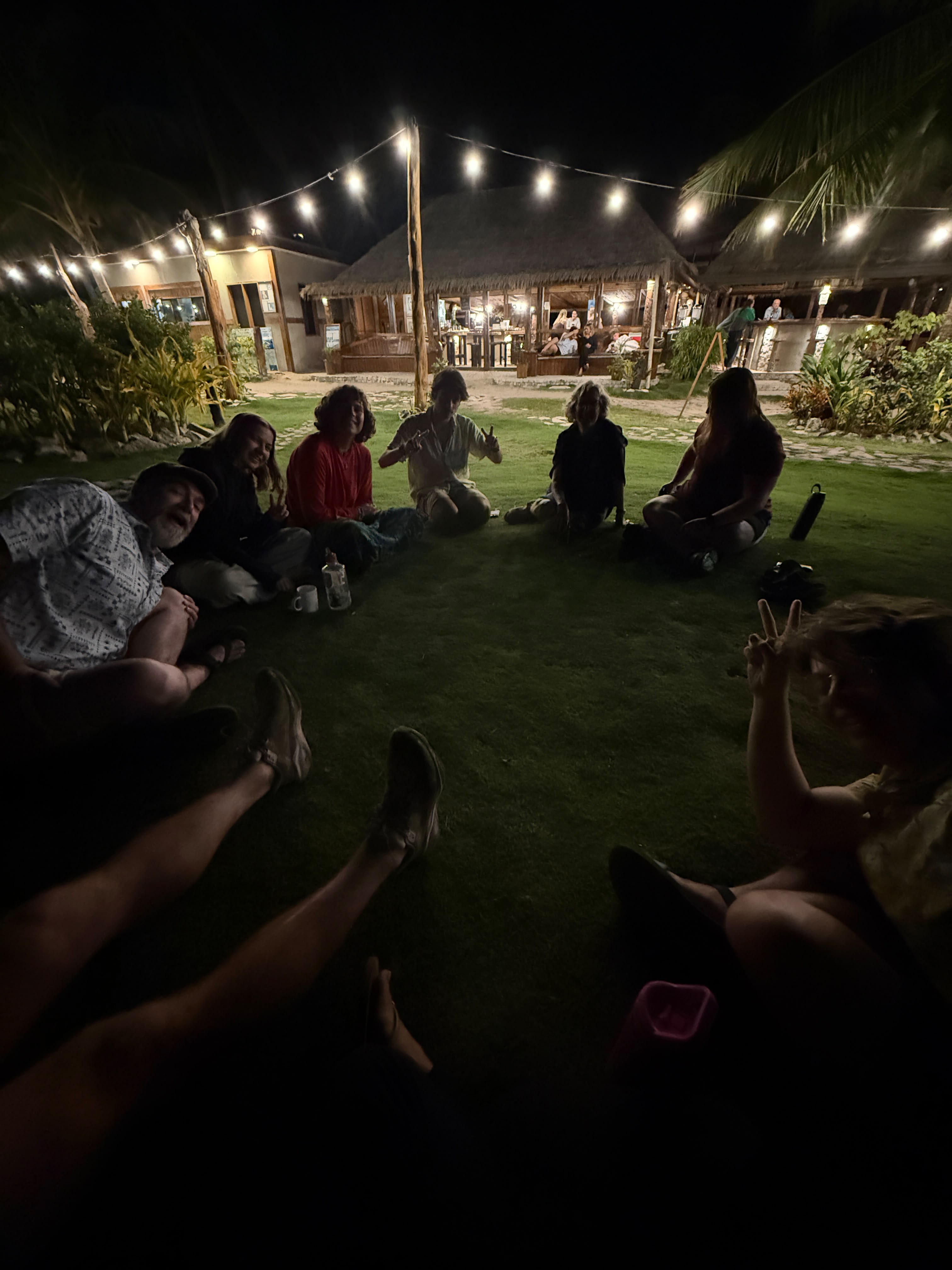
To end the day we had an appreciation circle where we went around and articulated how everyone in the group has impacted our lives and experience on the trip. It was a wonderful time where we showed gratitude for the little community we have created and everyone’s individual contributions.
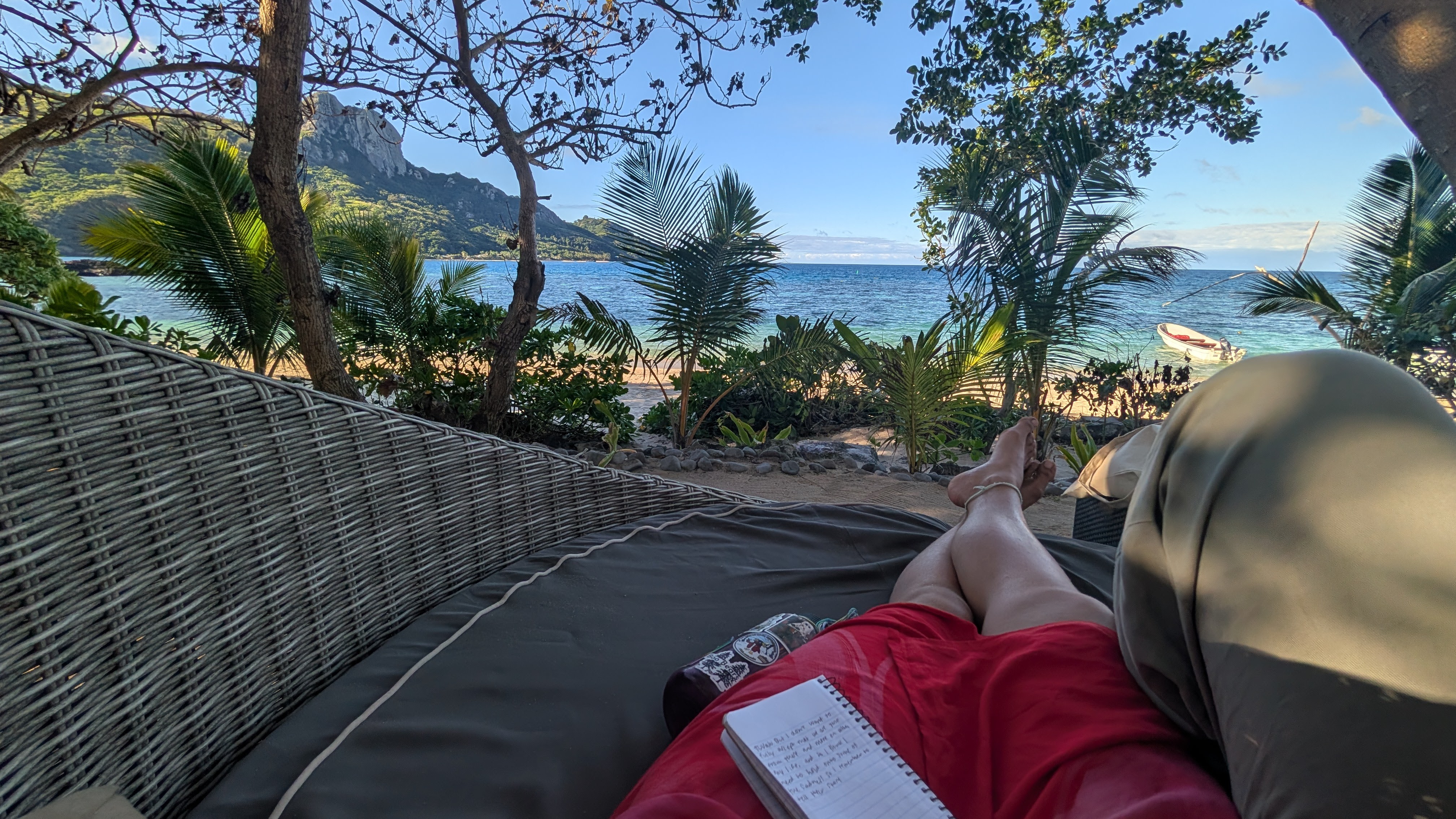
Between the activities of the day, I spent some hours working on the reflection journals, which are one of the assignments for the class. In one journal entry about the transition back from the Tuvaluan community and way of life, I described how I felt the first day back in Fiji:
“I’m in one of the most beautiful places on Earth … and I can’t stop crying because I miss the friends I didn’t know one week ago. But that is the power of Tuvalu.”
While that might sound dramatic, you truly cannot understand the strength and instant acceptance of the community unless you have experienced it. It is our love of that community, which welcomed us with open arms, who we formed a mutual bond with in such a short time, and who is struggling and will increasingly struggle due to climate change, that inspires us to make a difference, even when it seems impossible.
Many of the people reading this blog are from the United States, one of the largest carbon emitters on the planet, with policies moving away from the climate solutions we need. As Brian said in one of our group discussions, polls indicate that around 60% of Americans say they care about climate change. But if 60% of Americans voted like they cared about climate change, the world would look a lot different. If they do vote like they care, it will look different. The future of Tuvalu will look different. If you are an American voter, don’t just think of yourself when you go to the polls, think of Tuvalu, the happy island nation who is choosing to stay despite the impacts, because risking their safety is the lesser evil to giving up their community and letting their culture die. Don’t be the reason they have to change their choice. Let’s follow Tuvalu’s leadership and make a difference now, while we still can. Save Tuvalu, save the world.


Leave a comment