Sara Moore
Today is Thursday, June 18, and we had the opportunity to meet with two men who are doing very important climate work in Tuvalu and surrounding islands. Our first meeting was with Reverend Doctor Tafue Lusama. He works as a Climate Change Officer at the Pacific Theological College in Suva, Fiji and is also an ordained Minister of the Ekalesia Kelisiano Tuvalu (EKT). Rev. Lusama’s lecture was on the intersection of Indigenous knowledge, Christianity, and climate justice.
Rev. Lusama began by telling us a story about a group of boys who came across a bowl of apples and were asked to only take one. They then approached a second bowl full of candy where someone had written, “take as much as you want because God is busy watching the apples.” He explained how we often view ourselves as individuals and that we believe our actions will not impact anyone. He encouraged us to not think of ourselves in terms of a singular individual, but rather as a collective of everyone who has come before us. We are all connected to the “fenua” (which means “land”), and as such we are connected to one another. Fenua also includes our ancestors, whom we are connected to through “vaa fesokotaki,” which refers to a sacred space. Within this space, we are not rich or poor, living or dead, we are simply beings who wish to achieve the same goal. He explained that God is not responsible for climate change; rather it is the actions of humans that are blamed on God. He ended his talk by telling us that the beginning of the problem should be the beginning of the solution, because if the issue is not stopped at the source, then no one will be safe from its effects.
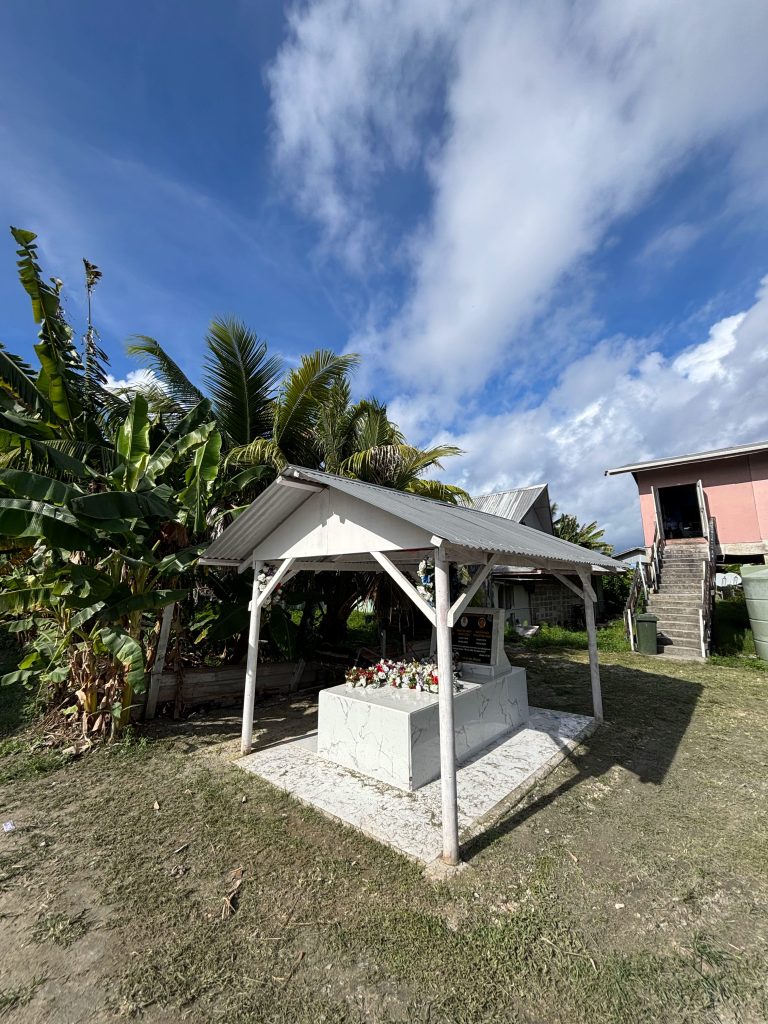
After Rev. Lusama’s talk, we had a short break for lunch and then a group of us went to the runway to watch a plane land. Tuvalu receives a small number of visitors so only one plane will arrive a day throughout the week. It is amazing to watch the world stop for the arrival of the plane as the runway is located at the heart of the island. It is very similar to watching a train go by, except everyone on the island is aware of its arrival. We were able to finally get our luggage after being separated from it on Tuesday. We then rushed back to the EKT office for our next lecture with Dr. Maina Talia.
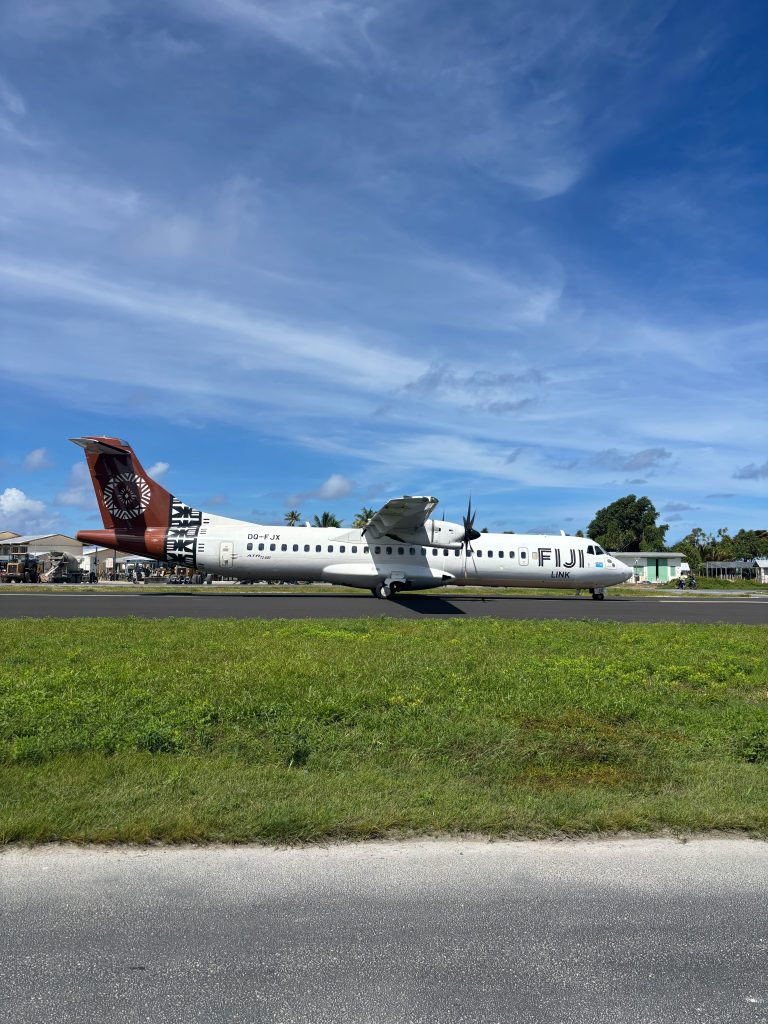
Dr. Talia is Tuvalu’s Minister of Home Affairs, Climate Change, and the Environment. The next year will be very important for Tuvalu as they are hosting the pre-COP (Conference of the Parties) meeting along with Fiji in October. They will also host the Conference on Transitioning Away from Fossil Fuels next spring. These two events will bring world leaders to Tuvalu so they can see the impacts of climate change first-hand. About 2,000 people are expected to attend the fossil fuel conference, so the government is constructing new lodging on the reclaimed land we visited yesterday, with the rest of the attendants residing on a cruise ship that will be docked near the island. He said the reclaimed land is something they can point to during the events as something they have done to combat the effects of climate change. Dr. Talia hopes to use these events to shift the narrative away from how vulnerable Tuvaluans are to how resilient they are. He stated that while the events are important, Tuvalu is often ignored on the global scale, so he asked us to use our voices to amplify theirs. Rather than blaming one another or God for climate change, Dr. Talia implored us to listen to one another, saying that if even one world leader walks away from the events with a new perspective, then he will have considered them a success.
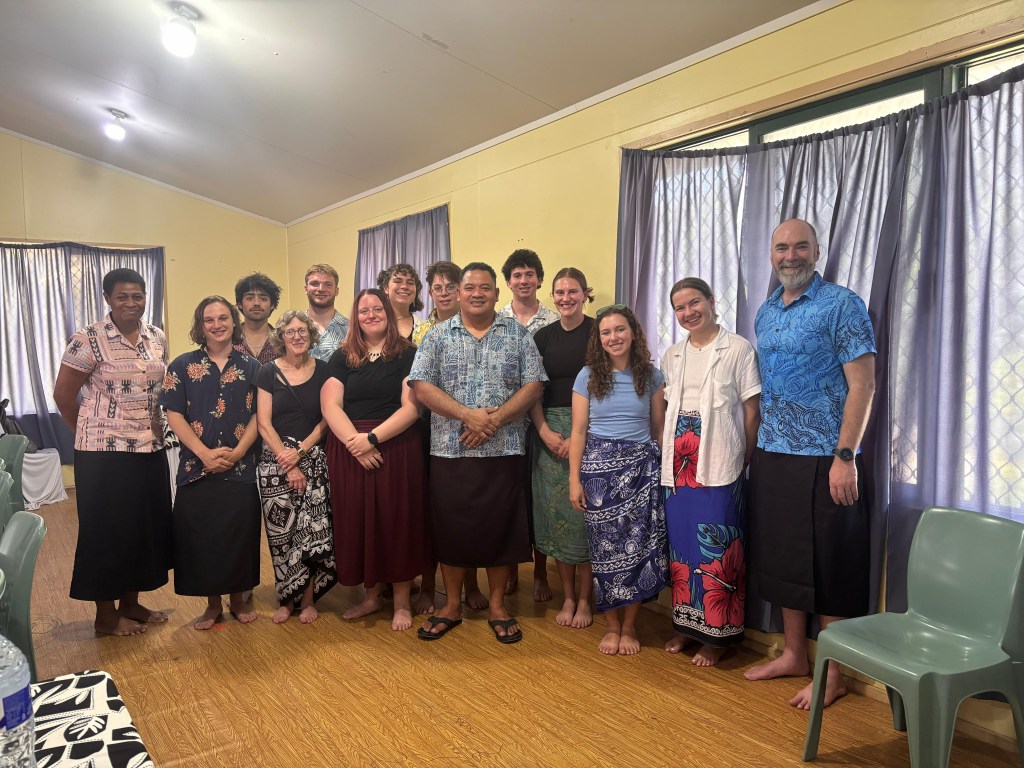
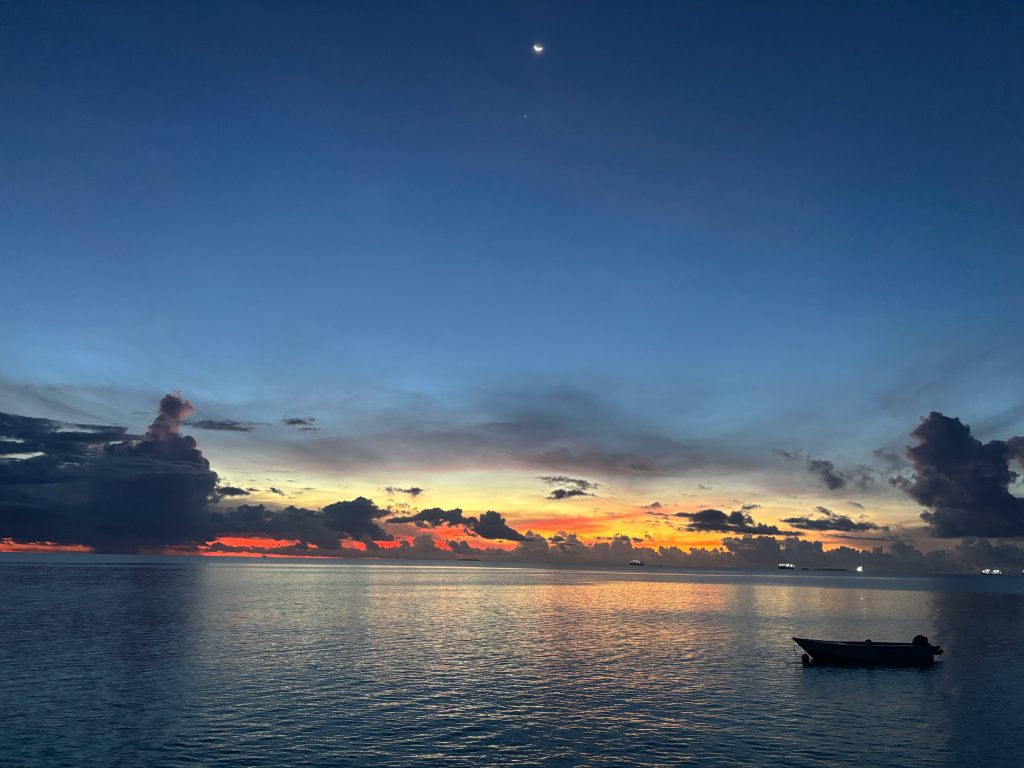
Later in the evening, we had a chance to walk along the runway and watch the locals play volleyball, rugby, and soccer. I was told that since the runway is not often used for planes, it acts as their playground and gathering space. We then visited the reclaimed land to watch the sunset and the appearance of the stars. You really do not realize how bright it is at night until you are somewhere with almost no light pollution and you can see the entire Milky Way. After dinner, we broke off into our small groups to spend the evening with the EKT youth and learn more about the island of Tuvalu by interacting with its people.
 Pacific Climate Justice TREK
Leave a comment